The popular mythology of creative genius depends on beloved stereotypes of the artist in youth and old age: the misunderstood upstart who forces us to see the world afresh; and the revered sage who shows us depths of insight attainable only through a lifetime of hard-won experience. -Martin Fuller, Artist, 1943 – living
In an era when the savviest of marketers are called to conjure visions of omnipotence related to big data analytics, in an era when most marketing executives are looking for ways to turn customers into fans, the encumbrance of mapping out the rise to an action, a phenomenon or a condition occurring within authentic engagements furthers.

Most companies boast about “what” they do while few companies communicate “why” they do it.
Professional experience and formal education are “auxiliary units” that shape and form the marketing disciple: Affording the skills to build campaigns around the “what” of something. Yet, I’ll argue that the study of contemporary and modern American mythology (fancy for comic books) better serves as a foundation for marketing professionals to devise riveting campaigns around the” why” motivator of most thoughts, habits, or impulses.
(…Okay! Very least, the argument of this post is that the study and joy of the comic book complements real or formal education…)
At a certain age, we’re taught that the study of cause and effect offers insight on the formation of phenomena. The study examines degrees of consideration between separate facts. We learn that the cause explains “why” something happens, and we learn the effect describes “what” happens. This helps explain why the literature on science and nature deals with cause and effect. However, awesome storytelling concentrates on the solicitation of emotions; not in prose approach.
The comic book (particularly modern American methodology) is the evolution of storytelling that teaches us about our humanity. For many, the comic book serves as a gravitating medium that introduces the interplay between good and evil, between right and wrong, with some storylines introducing the concept of moral and immoral discussion.
Culture hands us many definitions of art. In an early and primal explanation, art is any form of expression. More discerning descriptions of art become embedded as we grow into young adults. As parents and authority figures instill their values on appearance, centered on an application for the most part, and fueled by “art experts,” who portrays the comic book as distasteful drawings, too saturated, loud, or blatantly aggressive. It’s around this time when a child reaches a certain age that authority figures dictate which forms of expressions are suitable or proper.
Thus, many young adults find themselves joining secrete or secluded clubs in fear of unpopular status. And those are the luckier ones!
The bigger victims are those who joined the class that completely rejects the comic book. It’s the latter group, indoctrinated with the attitude of affirmed uncertainty that art is as much about the application as it is about the expression of human creative skill and imagination, who fails to value the use of the comic book.
Disregarded or underestimated, lessons within the forgotten comic book are lost, and stories trench in primary emotions are then forgotten.
The twist is that forgotten visuals imports images, memories, or feelings to mind, the evocation of emotions that provides fantasy, a form of solicitation; that continues to drive the fragrance industry.
The branding enthusiast within knows that primary emotions often guide behaviors and that businesses perceived to hold a robust entrepreneurial spirit embrace comic book fundamentals that transcend traditional boundaries of engagement.
Recognizing how the comic book is taken away for the novel and later for the textbook, this post will serve as an acknowledgment of the formative reading materials that introduced and cultivated marketing lessons further developed in business school.
 Please allow me to be with my favorite, as I endorse the illustration.
Visual Merchandising. Layout Occupation. Color and Decorative Style: About, or more than, half of the joy in reviewing comic books is in the visuals. In fact, many times, you can follow a story without the need for words. Comic book artists are masters at telling a visual story and at composing compelling concepts.

Application: Although understanding typography, kerning, leading, widows (etc.) remains a preferred skill, you don’t have to rely on the practice of accountable design. Often you’ll find a favorable response just by tantalizing your content with afferent symbols, models, and graphics. Be aware and differentiate your environment by introducing discernible smells, exotic audios, or ambient overlays. Rather than try to describe everything, use illustrations, forms, and spaces as venerating displays. This aids in learning and in consumption. True to this application, the reason for why a high-end restaurant would incorporate an open kitchen onto a formal dining hall.
Branding and Brand Awareness: Everyone recognizes the Superman shield, also known as the Superman logo, as the iconic emblem for the fictional DC Comics superhero, Superman. The iconic “S” within a pentagon is a literary symbol for the last son of Krypton, Kal-E, later named Clark Kent/Superman. However, the use of logo grows to display whenever there is a scene of rescue or a triumph battle.

Batman and Superman take a selfie for a variant cover
Application: In branding, the same method applies. If you don’t utilize bold branding or alike your products or services with the entire buying experience in mind, then you’re failing at an important part of the business.
Discerning Cross-Selling: As readers evolve into fans, they realize that buying one series doesn’t provide closure. Comic books are enriched with years of back-story, innuendos, and plot twists. It’s at this point that publishers, writers, and artists, i.e., founders, collaborate on which narrative best resonates with the whole story or on conceiving of a sister comic. At this stage of fanfare, founders distinguish which models to commit to while introducing “sensible” directions that mirror social and cultural change.
Application: Most managers cross-sell to every customer. And sure, higher sales volume means more profits. It’s without question that cross-selling is profitable in the aggregate. However, marketers that indiscriminately encourage all customers to buy more are making a costly mistake. Huh! What’s that?
Yes – intuition will have you believe that once you’ve done all the hard work to acquire a sale, you’re to automatically sell as many products or services as possible. Big mistake. Here’s why:
Service Demanders: The unyielding customer will habitually overuse customer service in all channels, from phone to web to face-to-face interactions. The additional cross-buying will cause an increase in service demands—along with overhead costs rising. True to this effect, some retail banks have discovered increased requests of “service demanders” for things such as assistance with online banking and balance transfers more than doubling after customers began cross-buying.
Revenue Reversers: Customers in this segment generate revenue but then take it all back. Within a business selling products, this typically happens through the return of merchandise. In many cases, the more a “revenue reverser” buys, the more he/she will return merchandise. Businesses selling services will remit to “revenue reversals” when customers default on early termination loans or service contracts.
Promotion Maximizers: These customers gravitate toward steep discounts and avoid regularly priced items. For the catalog retailer and for the fashion retailer, this means the average annual loss from each “promotion maximizer” will overhaul acquisition sales.
For the lifelong comic book reader, after experiencing the disappointment of a storyline, he/she learns to shield him/herself from their unwillingness to accept change. Storytellers and readers, through push and pull, have learned how the trajectory of sub-stories will cause others to no longer feel the same level of connection to the original storyline. Similarly, business professionals should take notice of the dark side of cross-selling.
Cross-selling to any of these problem customers is likely to trigger a downward spiral of decreasing profits or accumulating losses for two reasons: First, cross-selling generates marketing expenses; second, cross-buying amplifies costs by extending undesirable behavior to a greater number of products or services. This happens even among customers who were profitable before they began cross-buying.
Brand Management: Within the comic book, individual characters, the formation of teams and alliances, as well as a series – itself – become separate brands. Publishers, writers, and artists know this and truly appreciate their audience. The appreciation of their fan base grows into respect, so strong that publishers, writers, and artists are willing and able to experiment.

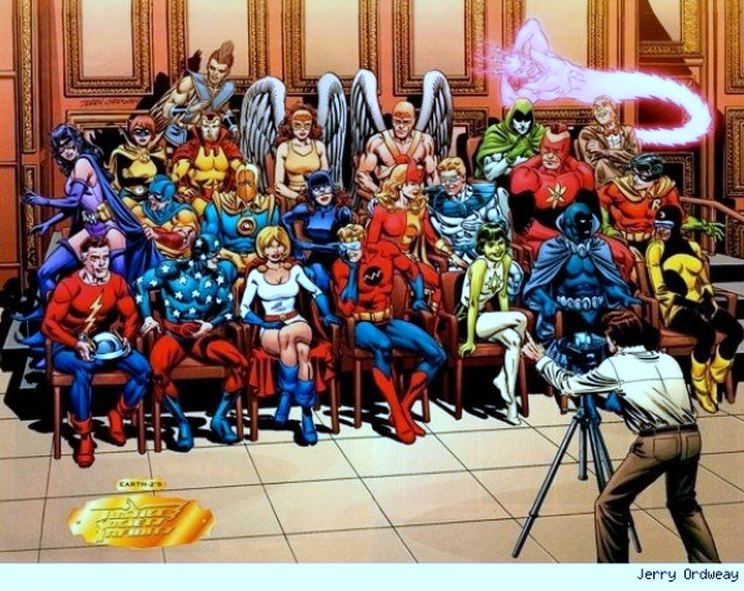
Bat-Family: Batman (Bruce Wayne), Robin (Damian Wayne), Red Robin (Tim Drake), Red Hood (Jason Todd), Batgirl (Barbara Gordon), Nightwing (Dick Grayson)
Application: For the Brand Manager, this lesson is about the delicate balance between pushing the boundaries while also staying message focused. The Brand Manager learns what the brand really means to the mass market (customer base, business partners, analysts, non-consumers, and future customers) and holds office over the messages and promises.
Global Online Marketing. Cross-Cultural Interaction. Service: “With great power comes great responsibility,” not only Ben Parker, the fictional character from Spiderman by way of Stan Lee’s pen, but similar quotes can be found all the way back in history.
What does this quote imply in today’s global online business model? How can discrimination in online communities be prevented? The answer is simple: It is neither possible to prevent discrimination, nor to avoid it. Although this perspective might seem like a pessimistic end to what appeared to be an optimistic post, this is not the case. 
Application: Instead, let’s redirect the original concern in the form of a better question: How can discrimination be managed in Internal online contexts? Approaching discrimination, multiculturalism, and communication between cultures on the Internet should be handled with the following factors: First, the environment should be accessible and non-discriminatory based on an extension of the model of the basic principles of hiring qualified employees to include the issue of culture; second, the communities within the environment should not be required to be accessible and non-discriminatory.
It has to be accepted that, in some instances, multiculturalism will not work if both cultures interacting online do not wish for it to work. Even if one side wishes for it to work, if the other does not, then true multiculturalism will not be possible.
Taking the concept out of the Internet and into the broader field of service, the important element to remember is that despite a business’ success, the responsibility of quality in standards, in the ability to deliver, to add, in the responsibility to inform and to engage remains the same. In fact, some might argue with powerful business comes more social responsibility. While China may hold lower global environmental standards, the core principle of business is to uplift society. And so, companies keeping values in line with higher standards must not deviate from course, trading for the greater welfare of a few, a medieval business practice that continues in the 21st century.

Conclusion: Like all myths and legends, modern mythology springs from a sense of life’s wonder, excitement, mystery, and terror. Modern legends offer images of the best and worst aspects of the human condition. Business, something with which persons are rightfully concerned, would suggest that good behavior will be rewarded and evil, greedy or foolish behavior punished. Some modern legends reflect people’s fear of rapid social change or of science and technology. In contrast, future revamped legends will appeal to people’s desire to find meaningful patterns beneath the confusing chaos of ordinary life.
Sagely Share: https://disqus.com/by/rick_sage/




 Sagely Salvaged